
In 2024 alone, Americans lost over $9 billion to scams, with fraudsters using tactics such as phishing, fake job offers, IRS impersonation, and more. This clear and informative infographic from F3 Investigations outlines the 10 most common scams, explains how they operate, and—most importantly—provides guidance on how to avoid them.
From romance scams to fraudulent rental listings, you’ll learn how to spot warning signs and protect yourself and your loved ones from financial loss and emotional distress.
[Click image for full size version]
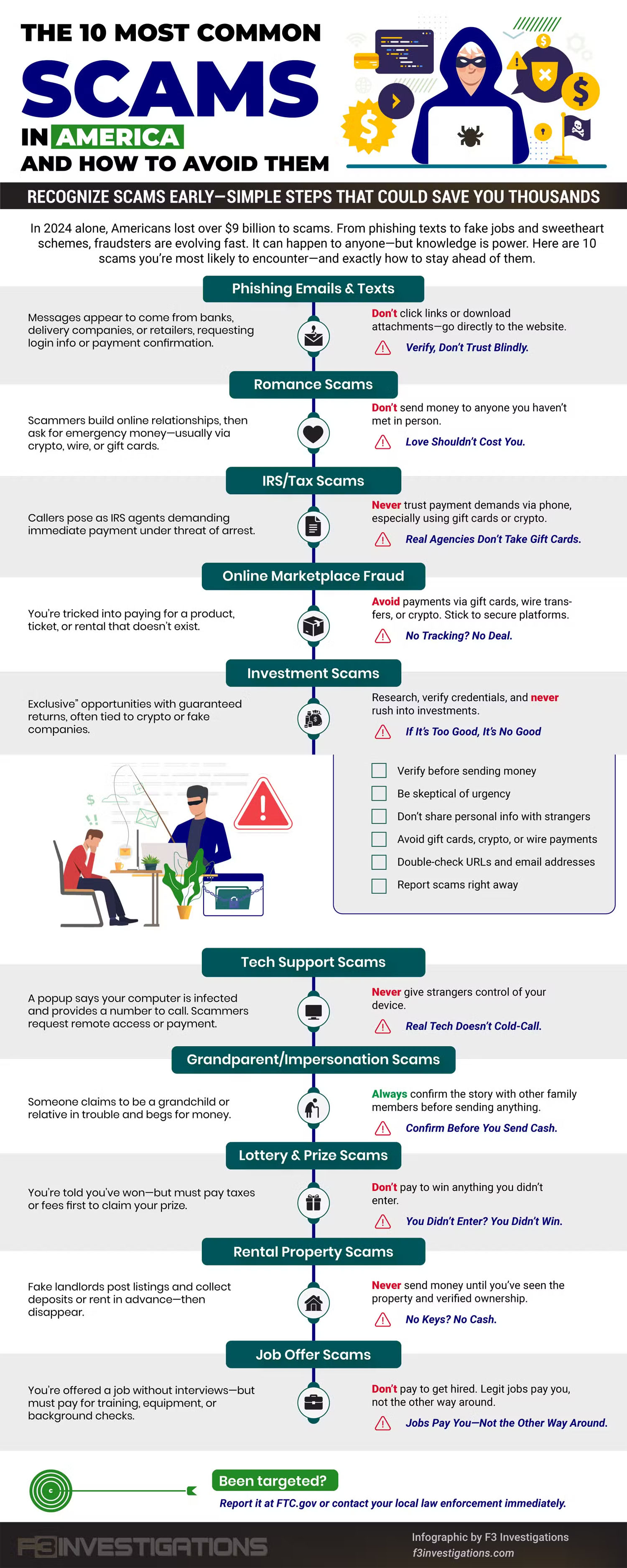
The 10 Most Common Scams In America And How To Avoid Them
Recognize Scams Early-simple Steps That Could Save You Thousands
In 2024 alone, Americans lost over $9 billion to scams. From phishing texts to fake jobs and sweetheart schemes, fraudsters are evolving fast. It can happen to anyone-but knowledge is power. Here are 10 scams you’re most likely to encounter-and exactly how to stay ahead of them.
Phishing Emails & Texts
Messages appear to come from banks, delivery companies, or retailers, requesting login info or payment confirmation.
Don’t click links or download attachments-go directly to the website. Verify, Don’t Trust Blindly.
Romance Scams
Scammers build online relationships, then ask for emergency money-usually via crypto, wire, or gift cards.
Don’t send money to anyone you haven’t met in person. Love Shouldn’t Cost You.
IRS/Tax Scams
Callers pose as IRS agents demanding immediate payment under threat of arrest.
Never trust payment demands via phone, especially using gift cards or crypto. Real Agencies Don’t Take Gift Cards.
Online Marketplace Fraud
You’re tricked into paying for a product, ticket, or rental that doesn’t exist.
Avoid payments via gift cards, wire trans- fers, or crypto. Stick to secure platforms. No Tracking? No Deal.
Investment Scams
Exclusive” opportunities with guaranteed returns, often tied to crypto or fake companies.
Research, verify credentials, and never rush into investments. If It’s Too Good, It’s No Good
- Verify before sending money
- Be skeptical of urgency
- Don’t share personal info with strangers
- Avoid gift cards, crypto, or wire payments
- Double-check URLS and email addresses
- Report scams right away
Tech Support Scams
A popup says your computer is infected and provides a number to call. Scammers request remote access or payment.
Never give strangers control of your device. Real Tech Doesn’t Cold-Call.
Grandparent/Impersonation Scams
Someone claims to be a grandchild or relative in trouble and begs for money.
Always confirm the story with other family members before sending anything. Confirm Before You Send Cash.
Lottery & Prize Scams
You’re told you’ve won-but must pay taxes or fees first to claim your prize.
Don’t pay to win anything you didn’t enter. You Didn’t Enter? You Didn’t Win.
Rental Property Scams
Fake landlords post listings and collect deposits or rent in advance-then disappear.
Never send money until you’ve seen the property and verified ownership. No Keys? No Cash.
Job Offer Scams
You’re offered a job without interviews-but must pay for training, equipment, or background checks.
Don’t pay to get hired. Legit jobs pay you, not the other way around. Jobs Pay You-Not the Other Way Around.
Been targeted?
Report it at FTC.gov or contact your local law enforcement immediately.